

Functional Earthship
A brief earthship lifestyle manual

Furthship 1.0: The Ultimate Guide to Sustainable Living Reinvented
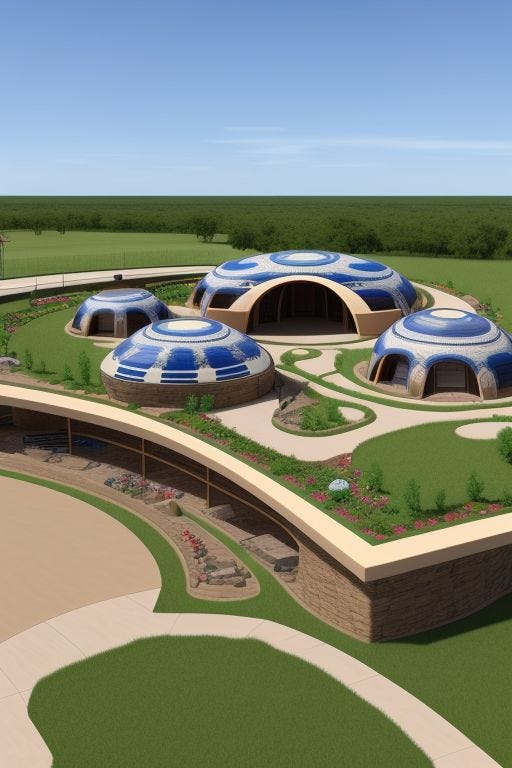
My AI powered rendition #28
Introduction: Redefining the Future of Sustainable Housing
Furthship is a functional earthship concept that attempts to blend well-known knowledge with cutting-edge technology in order to create low maintenance, climate-resilient, off-grid homes. By harnessing the power of nature and innovative solutions, Furthship offers a harmonious and self-sufficient lifestyle, pushing the boundaries of sustainable living. With this manual, you will discover how to build a home that thrives in sync with its environment, embracing an independent and resilient future.
Site Selection & Planning: Unlocking Climate Resilience
Climate Considerations and AI-Driven Insights:
Using historical weather pattern data combined with public sources ensures your build is strategically located to optimize solar exposure while mitigating climate risks. Once set up, AI climate control can leverage this information to ensure optimal temperature and humidity.
Underground Construction: Nature's Insulation Advantage
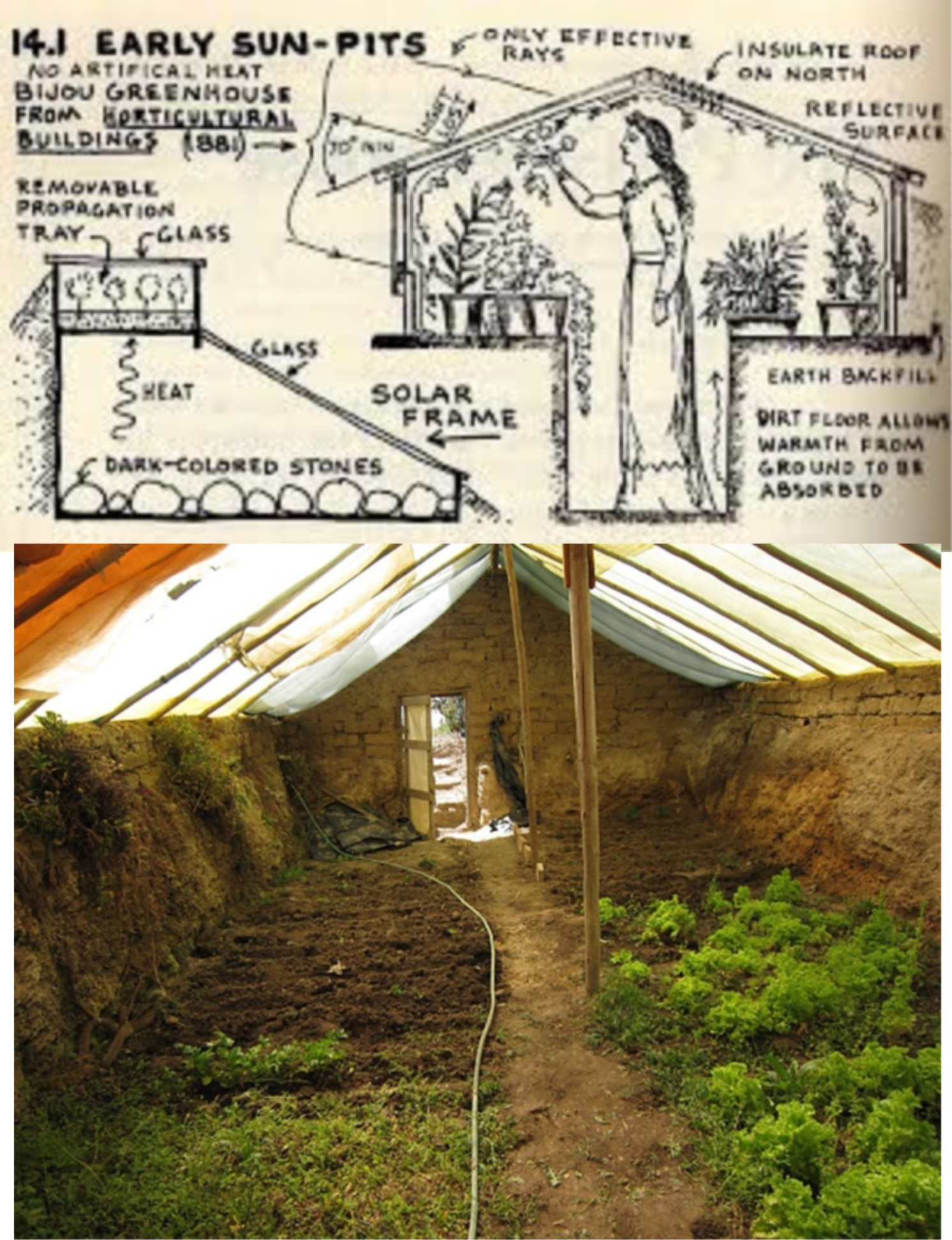
Underground construction harnesses natural insulation and temperature stability, offering exceptional energy efficiency. With depths of 6-12 feet, it utilizes earth's constant 50-60°F to stabilize indoor temps, reducing heating/cooling needs. Soil analysis ensures structural support, while waterproofing safeguards against moisture. Strategic skylights and vents provide natural light/air, and passive solar heating allows for year-round production similar to 'Walipini’ underground greenhouses in the Andes showcasing sustainable practices.
Solar Orientation and Historic Weather Analysis:
Orient your structure to capture optimal sunlight, harnessing passive solar heating and lighting. Analyzing historical weather patterns further refines your site selection, ensuring your home is future-proof and energy-efficient.
Structural Design: Merging Ancient Wisdom with Modern Innovation
Vietcong-Inspired Ventilation System:
Underground ventilation shafts, reminiscent of the Vietcong tunnels & termite mounds, provide a constant supply of fresh air. This natural ventilation system maintains air quality while keeping the structure cool and comfortable.
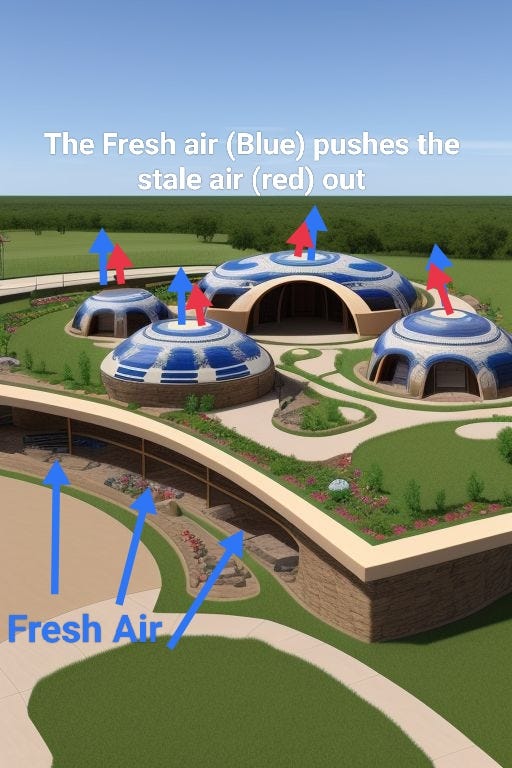
That corner ledge on the bottom right wasnt meant to be there. Imagine a smooth hill finish.
Geodesic Domes for Strength and Aesthetics:
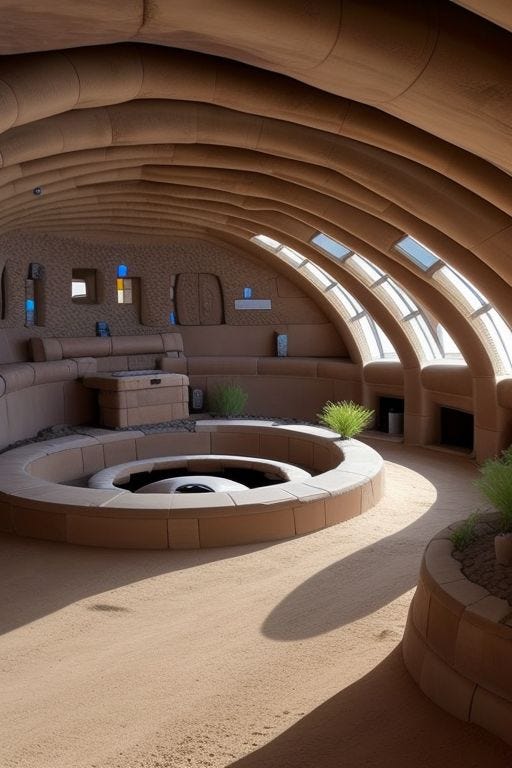
Incorporate geodesic domes for above-ground elements, offering superior structural strength and a unique visual appeal. These domes can be utilized for skylights, greenhouses, or common areas, flooding the space with natural light. There are people all over the world living in domes, like these Al here on Kirstens channel:
https://m.youtube.com/watch?v=s9E95fUrsAw&pp=ygUXTGl2aW5nIGJ1aWxkaW5nIGdlb2RvbWU%3D
Super-Insulated Walls and Resilient Materials:
Employ natural, recycled, and locally sourced materials for wall construction, providing exceptional insulation in addition to being a thermal mass. Explore advanced, sustainable materials for enhanced performance, durability, and resistance to extreme weather events. Old tires packed in with dirt or an earthcrete mixture are a solid choice.
https://m.youtube.com/watch?v=iA0GKJUd4qw
See 10:40
Energy and Water Systems: Off-Grid Independence and Efficiency
Solar Dominance and Smart Energy Management:
Harness the power of the sun with high-efficiency solar panels, and store excess energy in graphene based or lithium-ion batteries for electricity & Salt batteries for heat and hot water. Be sure to optimize usage through IoT-enabled smart grid systems, allowing remote monitoring and control.
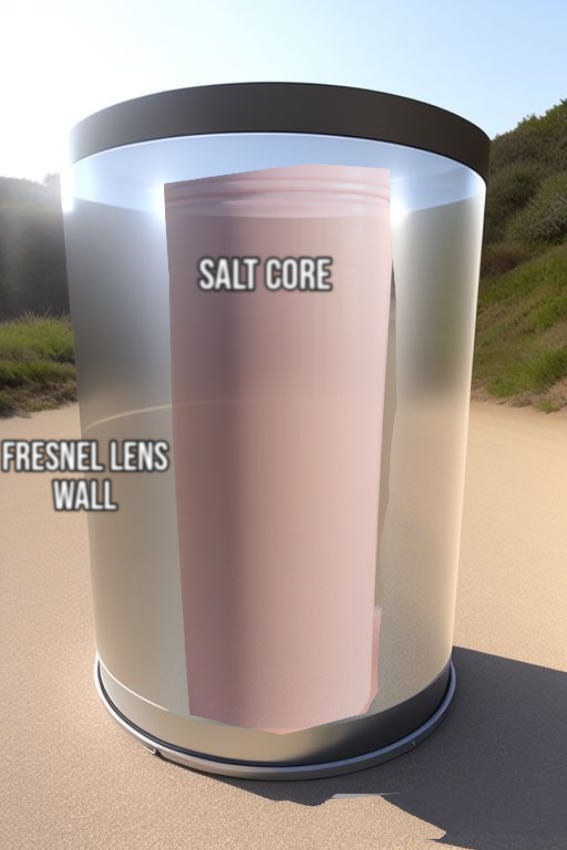
Btw I just came up with this as a concept. As far as I know it hasn’t been done yet.
Diversified Energy Sources: Wind, Hydro, and More:
Supplement solar power with wind turbines or micro-hydro systems, depending on your location. Embrace a diverse and resilient energy portfolio, ensuring a consistent supply of renewable energy.
Rainwater Harvesting and Water Conservation:
Implement rainwater catchment systems, treating and storing water for various uses. Minimize waste through water-efficient fixtures and IoT-controlled irrigation, ensuring water security and sustainability. Check out Andrew Millison’s channel for a wealth of knowledge on how to replenish the water table.
https://m.youtube.com/@amillison
Temperature Regulation: Year-Round Comfort with Natural Solutions
Earth Tubes for Natural Air Conditioning:
Utilize earth tubes or similar to precondition incoming air, harnessing the earth's stable temperature for natural cooling or heating. This passive temperature regulation reduces the need for mechanical systems.
Straw not included as part of e-manual
Geothermal Heat Exchange and Thermal Mass:
Furthship utilizes geothermal heat pumps with a COP of up to 5, providing efficient heating and cooling. Combining this with thermal mass elements regulates temperatures. A 3-ton system in a 2,000 sq. ft. Earthship offers a rapid ROI with significant energy savings, making it an environmentally friendly choice.
Low-Tech Climate Control and AI Optimization:
Explore passive cooling methods, such as cross-ventilation and natural shading found programmed in nature. The use of AI-driven temperature optimization can further refines climate control, learning your preferences and adapting accordingly.
Food Production and Waste Management: Embracing Circular Economy
Underground Greenhouses and Vertical Farming:
Take advantage of underground spaces and natural light for productive growing areas. Hydroponics, aquaponics, and vertical farming techniques maximize food production while conserving water and space.
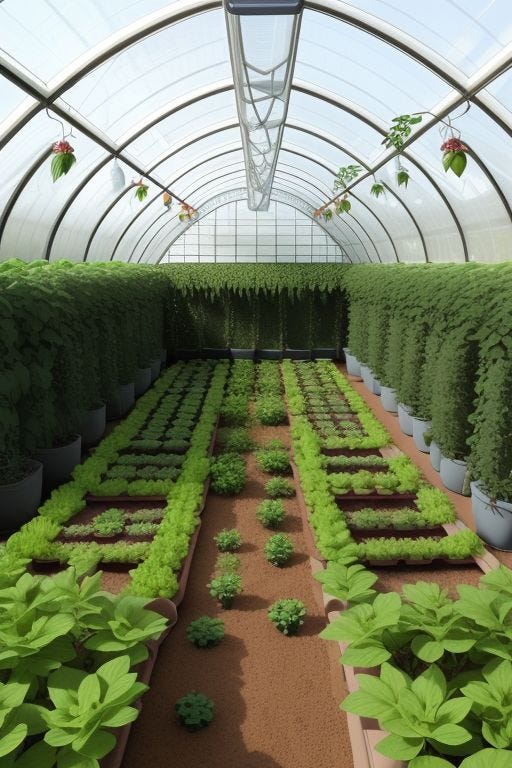
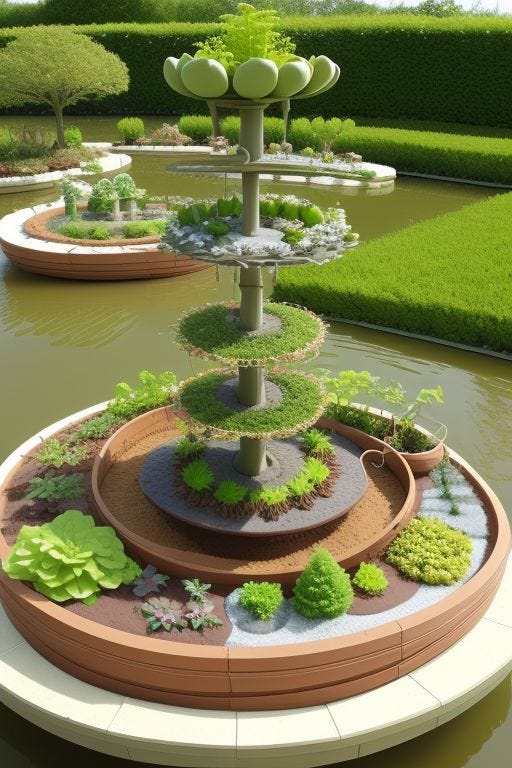
Combine the two images mentally because why not?
Permaculture and Forest Gardening:
Permaculture and forest gardening techniques are employed around Earthships to create resilient food ecosystems. By utilizing permaculture principles, food forests and herb spirals are designed to optimize crop yields, reuse waste, and enhance biodiversity. AI technology, such as the Xenia project, predicts weather patterns, optimizing water and resource management. This regenerative approach aligns with self-sufficiency and ecological harmony, fostering a thriving and sustainable food production system.
Comprehensive Waste Management:
Implement composting toilets, food waste recycling, anerobic digesters, worm systems and upcycling practices. Explore waste-to-energy technologies, such as anaerobic digesters or small-scale gasifiers, to generate usable energy and further reduce your environmental footprint. Check out Joep and Julia’s system on Teisho’s channel.
https://m.youtube.com/watch?v=oBz6eXsSX6k&pp=ygUTV29ybSBjb21wb3N0IHRvaWxldA%3D%3D
Community, Collaboration, and Knowledge Sharing
Open-Source Platform and Collaborative Research:
Foster a vibrant community through an open-source platform, sharing innovations, best practices, and research. Encourage interdisciplinary collaboration to continuously advance sustainable living and Earthship design.
Community Engagement and Mutual Support:
Build connections with fellow Earthship residents based on shared values, pooling resources, organizing workshops, and creating support networks. Strengthen your community's resilience and enhance the Earthship living experience through mutual aid and collective action.
Long-Term Sustainability, Adaptability, and Maintenance
Adaptive Design for Evolving Conditions:
Incorporate flexible designs that adapt to changing environmental conditions. Predictive maintenance and seasonal reviews anticipate and prevent potential issues, ensuring the longevity and optimal performance of your Earthship.
Continuous Improvement and Innovation:
Stay engaged with the Earthship community, contributing to and benefiting from collective knowledge. Regularly update your systems and designs, embracing new technologies and innovations that enhance sustainability and resilience while keeping archives of stable checkpoints.
Embrace the Earthship Lifestyle
Earthships are more than just a structure; they are a paradigm shift towards sustainable, resilient, and harmonious living. By adopting these advanced technologies and design principles, you're not just building a home, but also opening the door for others now & for generations to come.
I hope you found this manual useful as you embark on a journey of innovation, self-sufficiency, and environmental stewardship. Thanks for reading.